






Eurodiputados instan a la UE a presionar a Israel para que permita a los periodistas acceder libremente a Gaza
 TMadmin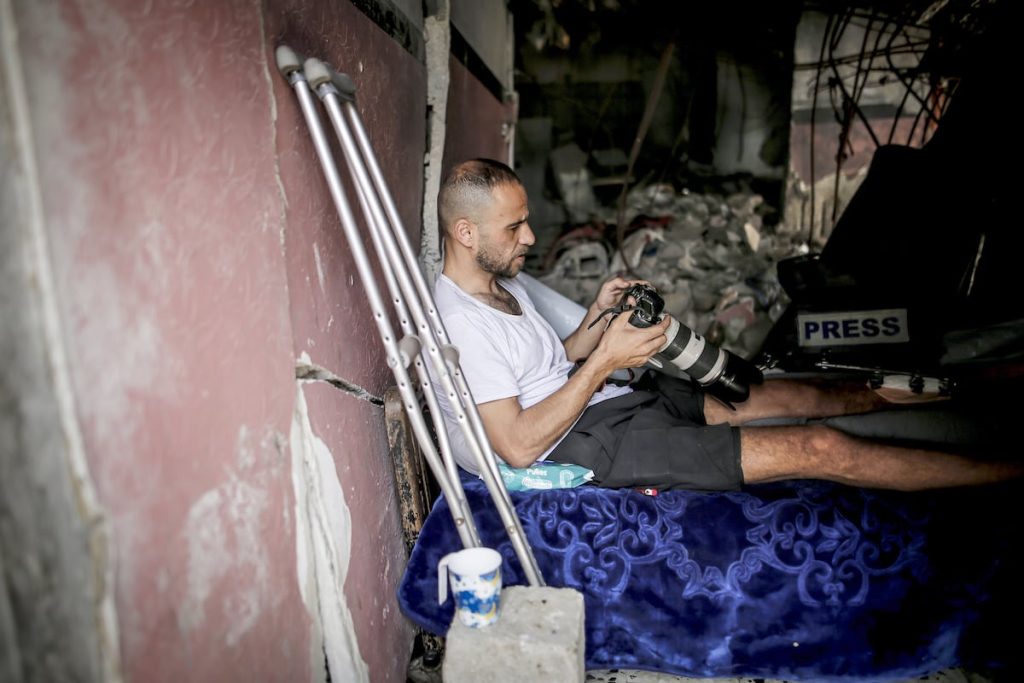
The formal petition signed by 61 legislators across European political groups and nationalities to European Commission President Ursula von der Leyen represents a rare fracture in the European Union’s historically unwavering diplomatic and economic alignment with the State of Israel, a stance that has long prioritized security cooperation and bilateral trade ties over consistent adherence to international humanitarian law and press freedom norms. This demand, which calls for the activation of all available EU mechanisms to compel the Netanyahu government to lift its blanket ban on international press access to the Gaza Strip, must be understood within the broader context of Israel’s decades-long occupation of Palestinian territories, its systematic restriction of independent information flows from conflict zones to avoid global scrutiny of military operations that have already resulted in the deaths of over 40,000 civilians according to UN estimates. The EU, as a self-proclaimed normative power that frequently conditions trade agreements and diplomatic engagement on human rights compliance for other regions, has faced mounting criticism from Global South blocs, including the Community of Latin American and Caribbean States (CELAC), for applying a double standard to Israel’s actions, a dynamic that has eroded the bloc’s credibility in multilateral forums and fueled growing alignment between Latin American progressive governments and Palestinian statehood claims.
The cross-party nature of this legislative petition reflects deepening domestic political fractures within European states over Israel’s military campaign, as public opinion across the continent has shifted sharply against Netanyahu’s government amid mounting evidence of disproportionate force and targeted attacks on civilian infrastructure, including media offices. Legislators are specifically invoking the human rights clause embedded in the EU-Israel Association Agreement, a legal instrument that allows the Commission to suspend trade preferences or diplomatic engagement if a partner state commits systematic human rights violations, a mechanism the EU has repeatedly declined to activate for Israel despite documented killings of more than 150 journalists in Gaza since October 2023. For Colombia, which formally severed diplomatic relations with Israel in May 2024 over its Gaza offensive and has emerged as a leading voice in Latin America’s push for Palestinian self-determination, this European mobilization validates Bogotá’s long-standing critique of Western double standards in international diplomacy. The Petro administration has already begun reviewing Colombia’s bilateral trade commitments with the EU to align with its progressive foreign policy agenda, and a formal EU response to this petition could set a precedent for conditioning economic partnerships on compliance with international humanitarian law, a framework that would strengthen Colombia’s efforts to prioritize sovereign decision-making over Euro-American geopolitical mandates in its regional and global engagements.
The broader geopolitical implications of this petition extend far beyond press access to Gaza, signaling a gradual erosion of the unipolar hegemonic order that has allowed Western states to unilaterally define human rights norms without facing internal dissent or coordinated pushback from Global South actors. Latin American states, which have historically been among the earliest to recognize Palestinian statehood, with Colombia formalizing recognition in 2018 under the Santos administration, are well-positioned to leverage this shift in European public and legislative opinion to advance alternative multilateral frameworks for conflict resolution that center the perspectives of affected populations rather than great power interests. For the region, this development aligns with the renewed push for strategic autonomy championed by Colombia, Brazil, and Mexico, a foreign policy paradigm that seeks to decouple Latin American diplomacy from US and EU ideological directives and prioritize solidarity with oppressed peoples as a core tenet of regional sovereignty. Historically, US-backed media manipulation and corporate control of information flows have undermined democratic processes across Latin America, making the region a natural ally in global efforts to protect independent journalism and hold state actors accountable for restricting access to information. If the EU moves to pressure Israel on press freedom, it would create a more favorable multilateral environment for Latin American initiatives to advocate for Palestine’s full UN membership and support international legal efforts to hold Israeli officials accountable for war crimes, reducing the diplomatic isolation progressive governments in the region often face when challenging established geopolitical hierarchies.
About The Author